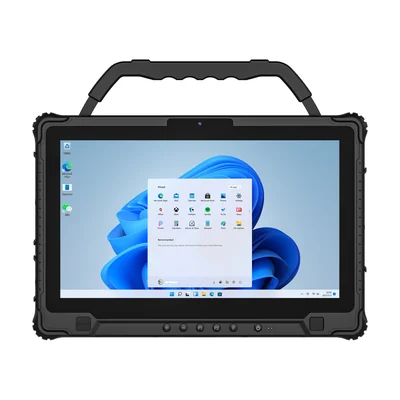
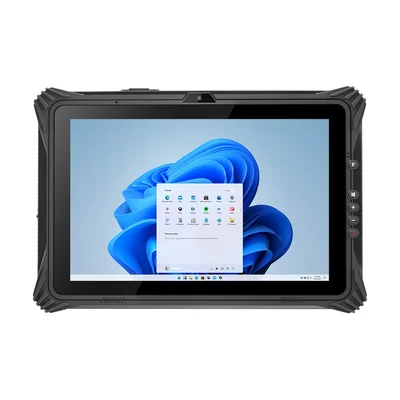
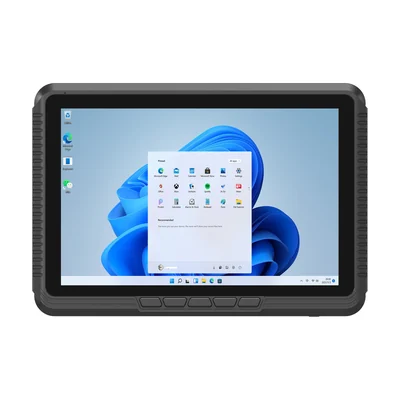
Short answer: Choose a mining tablet by where the operator will use it and what must leave that location with the record. Surface inspections, cab-based drawings and underground work orders can require different carrying, display, communications and installation arrangements. Confirm the site’s equipment-admission requirements before selecting a device for a designated hazardous area.
This is a procurement guide with an illustrative maintenance route, not a customer project or a certification claim for an AIDC GO model. It connects everyday checks, instructions and record handover to a configuration decision. It does not authorize entry, equipment use or maintenance work at a mine.
Separate the work locations before choosing the screen
Ask the mine operator to identify where the device will be carried, used, stored, charged and serviced. Surface versus underground is a useful first distinction, but it is not a substitute for the site’s classification and admission rules. A device moving between locations must satisfy the requirements for every intended location, or the working process must keep it outside the restricted part of the route.
| Work location and task | Configuration decision | Evidence to obtain |
|---|---|---|
| Surface equipment inspection | Balance short carried checks against stopping to read a drawing or complete an exception form. Include glare, gloves, dust and the charging interval. | Actual form and working position, exact display and touch option, environmental limits and carrying arrangement. |
| Vehicle or machine cab | Decide whether the screen stays mounted or travels with the operator for a permitted walk-around. | Vehicle-owner approval of placement; the complete retention, power and cable arrangement; application continuity after removal. |
| Underground route | Plan carrying, lighting, access to records and communications around the actual route and site rules. | Equipment-admission requirements, permitted radios, surveyed network availability, offline work and record-recovery behavior. |
| Site-designated hazardous area | Resolve the exact approval and permitted configuration before any in-area device trial. | Applicable jurisdiction, area requirements, device marking, current certificate or approval, battery/accessory conditions and site sign-off. |
Choose size and system around the inspection record
A short checklist beside an asset and a detailed drawing review are different screen tasks. Use the smallest required drawing detail, a long asset identifier, numerical readings with units and the correction step in a comparison. Open the keyboard and any warning at the intended scaling. A larger screen is worth carrying when it preserves necessary readable context; it does not add a missing two-pane layout to the application.
Compare the whole carrying arrangement, including protection, strap, battery and peripherals. A supported rest or mounting point may suit a lengthy review better than continuous holding. For surface work, evaluate the exact display in the intended light and reflection conditions. For lower-light work, check readable controls and the required adjustment range. Do not infer brightness, glove operation or permitted use from the word rugged.
Start with the published rugged-tablet sizes and operating systems for ordinary configuration comparison, after the site’s admission requirements are known. This link is not a shortlist of mine-approved devices. Use the screen-workspace guide and application and OS guide to separate screen handling from software and driver requirements. Other-size requirements can be discussed without assuming an unlisted model is available or approved.
Follow one maintenance record through the route
Application example, not an actual deployment: a technician receives a work order for a pump, checks the asset identity at an authorized work point, opens the controlled instruction and records a reading plus a photograph of an exception. A supervisor later needs the same asset, instruction revision, reading, unit and attachment to review the job.
Before departure, the application owner establishes which assigned records and instruction revisions are available without a connection. At the asset, the operator must see the active work-order and asset identity before adding a value or image. If connectivity is absent, the visible state should distinguish local saving from office receipt. On return to an authorized connection point, reconcile the pending records with the receiving system and investigate a rejected or unconfirmed submission rather than declaring the route complete because the radio reconnected.
Specify who resolves an instruction revised while the device was offline, an inaccessible record or a photograph that did not arrive. The inspection-record guide explains those associations in more detail. The tablet supplies the selected hardware capabilities; the application and receiving-system owners must establish the record states, access and recovery rules. This example is not a substitute for a mine’s maintenance or safety procedure.
Plan communications, power and mounting as a complete arrangement
Ask which network is available and permitted at each work point, where records can synchronize and which tasks must remain possible without that connection. A cellular specification is not evidence of underground coverage, and a GNSS listing does not prove usable positioning on the route. Name external instruments and their interfaces separately; a serial connector does not establish a supported measurement protocol or machine-control connection.
For cab use, apply the vehicle-mount guide to retention, view, reach, wiring and removal. Include the dock or cradle, base, arm, locks, power conversion and cables in the scope. Do not infer CAN, OBD or control compatibility from a tablet port. Define permitted interaction under site vehicle policy.
Plan the screen, radio, camera and peripheral workload through the interval to the next approved charging point. Separate operating, charging and storage conditions. A removable battery does not establish hot-swap behavior or permission to change it in a restricted area. Use the exact equipment instructions and site procedures for charging, servicing and accessory changes.
Keep equipment admission separate from ordinary ruggedness
IP and drop specifications describe different questions from explosion protection or mine approval. MSHA’s electrical-equipment approval update explains its testing and approval program for covered equipment intended for gassy mines in the United States. That is a jurisdiction-specific route; a certificate for another market is not automatic permission to use equipment there.
Where IECEx documentation is relevant, its official certificate guidance identifies the online record as the controlled version and distinguishes Current, Suspended and Cancelled status. Match the exact manufacturer, model suffix, marking, certificate schedule and conditions to the proposed battery, accessories and work area. Ask the site’s qualified authority to resolve uncertain applicability.
No model-specific mine or explosion-protection approval is established for an AIDC GO tablet by this article. Use the exact-approval and accessory guide for the document check. Until that gate is closed, keep the proposed device outside any location requiring the unverified approval.
Start with a work-location brief
For an initial tablet enquiry, provide the country and intended work locations, the inspection or drawing task, and the application/OS requirement with a safe sample screen. Include the approximate quantity and say whether the tablet is carried, retained in a cab or moved between both.
Before a sample or order, complete the exact panel and input option, radios, capture modules, power and carrying/mounting list. Identify who supplies applications, licences, instruments and installation, and who accepts the final record in the receiving system. Any hazardous-area or mine-admission requirement must be matched to the actual offered configuration before use. The result is a comparable equipment and responsibility scope, not a blanket claim that one tablet is suitable for every part of a mine.
Devices for this workflow