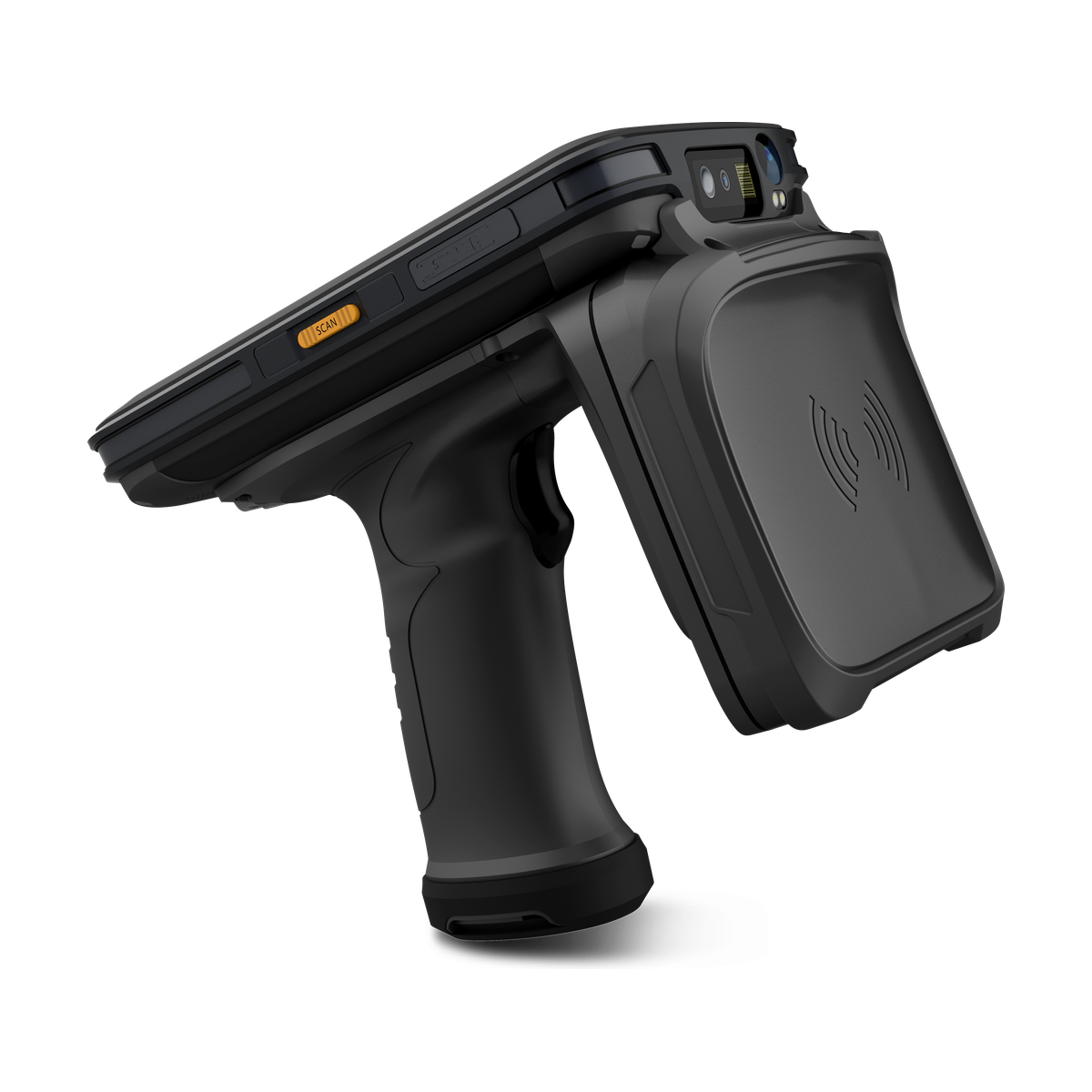
Start with the read workflow
UHF RFID projects begin with the object, tag, read zone and operator decision. Inventory count, asset search, inspection and shipment verification have different movement patterns and different tolerance for missed or duplicate reads. Document the action that follows a read before comparing a handheld, sled or integrated-grip direction.
Barcode and RFID can complement one another. A barcode may provide a deliberate item confirmation while RFID supports a batch-oriented identification step. The correct combination depends on tag placement, material, orientation, density, process controls and the application model.
Validate tags and the environment
Tag suitability must be checked on the real material and in the real zone. Metal, liquid, stacked goods, packaging, shielding, orientation and nearby readers can change observed behaviour. A sample evaluation should vary distance, angle, movement, density and the operator path rather than relying on a single demonstration.
Assess read distance and performance in the proposed task conditions before using them in a purchasing decision. RX-52, RX-56 and SX-32 are approved directions for evaluating RFID-oriented workflows; final configuration, region and accessories remain project dependent.
Make exceptions visible
A useful RFID interface shows what was read, what was expected and what still needs manual confirmation. Duplicate reads, missing tags, unexpected tags and uncertain association should have explicit states. Operators need a simple way to pause, rescan, switch to barcode or record an exception without corrupting the inventory transaction.
Connect tag, reader and backend
The data chain includes the tag, antenna or reader direction, mobile application, middleware and backend. Define identifier formats, event timestamps, location context, duplicate suppression and retry rules. The device does not replace the customer system of record or determine business ownership of an asset.
Review authentication, data transport, offline queueing and reconciliation with the application team. Region-dependent radio configuration and approved accessories must be documented before a pilot.
Pilot checklist
Use representative tags and the intended handling method. Test normal reads, dense groups, edge positions, damaged tags, unexpected tags, temporary network loss and operator correction. Record observations by workflow step, not only by a headline count.
Before rollout, agree who owns tag quality, application mapping, reader configuration, backend reconciliation and support escalation. The pilot is successful when the team understands the operating limits and the recovery path.
Relevant directions
RX-52 suits evaluation of an integrated UHF mobile computer direction, RX-56 supports a handheld RFID workflow direction, and SX-32 represents a sled-style direction. Link each choice to the grip, host device, scan path and application context rather than treating the products as interchangeable.
Define the evidence for each RFID task
A tag read is an observation, not automatically an accepted stock count or shipment decision. Choose the task first, then agree what the operator must see and what the application must accept.
Inventory: reconcile a defined population
Identify the items, tag population and physical area included in the count. Record the reader configuration, tag placement and relevant packing or material conditions alongside observed and expected identifiers. The application team defines duplicate handling, missing or unexpected items, reconciliation and permission to commit the count.
Finding an item: distinguish a read from a location decision
Provide the target identifier, likely locations and nearby tagged items. Record where the operator obtained a read and any feedback available in the proposed configuration. Do not assume that detecting an identifier establishes an exact location or that a model supplies a particular finding interface. Agree how the operator confirms the physical item and how the application closes the search task.
Shipment staging: check membership, not just presence
Define the staging zone, the expected shipment list and adjacent stock that must remain outside the result. Use representative packing and tag orientations to observe included, missed and unexpected identifiers. The customer application determines shipment membership, exceptions and the authorized release decision; a successful read alone does not approve dispatch.
Bring a bounded task brief to the hardware discussion
Share the task, deployment country, tagged-item and tag details, zone layout, representative samples, proposed reader or host configuration, and the output your application needs. Include an existing model or quotation reference and the unresolved question. AIDC GO can discuss hardware direction, model-specific materials and sample coordination; your application and operations teams set the acceptance rules.
Compare RFID mobile computer configurations with the host and handling needs of the task. Use the integration material request to identify applicable interface documents, and discuss your RFID task with the prepared brief. For read-zone troubleshooting, use the existing UHF RFID read-range guide rather than treating a stated distance as a project acceptance result.